- Igniting Innovation, Nurturing Futures
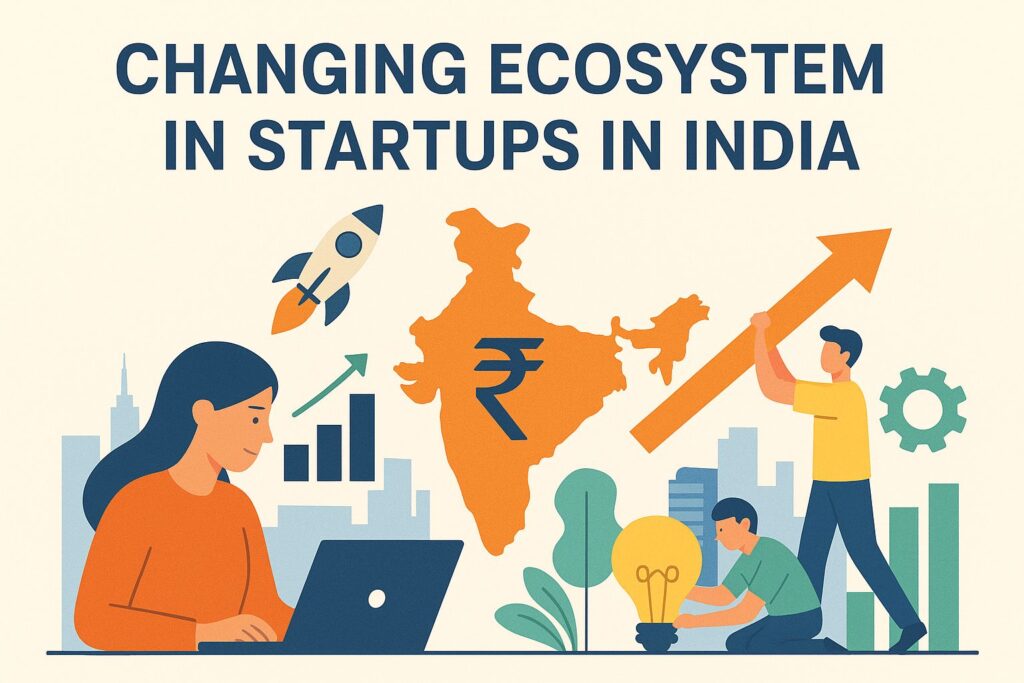
Over the last decade, India has emerged as one of the world’s most vibrant startup hubs. What began as a slow, tech-driven movement in a few metro cities has now transformed into a nationwide wave of innovation, entrepreneurship, and digital-first solutions. The ecosystem is evolving rapidly—powered by young talent, maturing investors, supportive government policies, and a surge in technology adoption.
1. From Metro-Centric to Pan-India Innovation
Indian startups are no longer limited to Bengaluru, Mumbai, or Delhi. Tier 2 and Tier 3 cities—like Jaipur, Surat, Kochi, Indore, Bhubaneswar, and Coimbatore—are seeing a rise in incubators, coworking spaces, and local angel networks. This decentralization means students and young entrepreneurs everywhere now have access to opportunities that were once location-dependent.
2. Rise of Student Entrepreneurship
College campuses have become hotbeds of innovation. Incubators, entrepreneurship cells, and startup competitions are empowering students to pursue ideas early. With access to mentorship, grants, and emerging tech tools, the younger generation is building solutions that are more agile, bold, and globally relevant.This decentralization means students and young entrepreneurs everywhere now have access to opportunities that were once location-dependent.
3. Funding Landscape Growing More Mature
India’s investment ecosystem has evolved significantly:
•Pre-seed and seed funds are more accessible.
•Angel networks and micro-VCs are supporting very early ideas.
•Corporate venture arms and global investors are actively scouting Indian startups.
Even in challenging economic cycles, “build-in-India” remains attractive to investors due to the scale of the domestic market.
4. A Shift Toward Sustainable & Purpose-Driven Ventures
Startups are increasingly focused on:
• Climate tech
• Clean energy
• Healthtech
• Agritech
• Social impact solutions
Younger founders want to build not just profitable companies but meaningful ones—solutions that contribute to India’s development and the planet’s future.
5. Technology-Led Innovation at the Core
With affordable data, rising AI adoption, and deeper integration of tech across sectors, India is entering a new era of:
• AI-driven automation
• On-chain and decentralized applications
• Deep-tech innovation
• Advanced manufacturing & robotics
• Digital public infrastructure (like UPI, ONDC, and DigiLocker) forming the foundation for startups
This technological backbone is enabling ventures to scale faster than ever.
6. Stronger Support Systems: Incubators & Accelerators
Institutions and universities now play a major role in shaping India’s startup culture. Incubation centres provide:
• Mentorship & advisory
• Funding support
• Technical infrastructure
• Networking opportunities
• Training and workshops
These support systems enable founders—especially students and first-time entrepreneurs—to navigate challenges and launch scalable businesses.
7. A Policy Environment Built for Growth
Government initiatives like Startup India, Fund of Funds, Atal Incubation Centres, and various state-level policies have simplified compliance and made it easier to start and grow a business.
Schemes for innovation, IP support, and sector-specific incentives are driving entrepreneurs to explore new frontiers.
8. The Future: Global Aspirations, Local Solutions
Indian startups are now building for the world—from SaaS companies to AI startups catering to global markets. At the same time, there’s a powerful push toward solving uniquely Indian challenges in mobility, finance, education, agriculture, and healthcare.
This dual approach is positioning India as a global innovation powerhouse.
The Ecosystem Is Changing—And Students Are at the Heart of It
As India’s startup landscape evolves, the role of institutional incubators becomes more crucial than ever. They help students and alumni think big, innovate responsibly, and build solutions that matter.
The next breakthrough startup could come from a campus dorm room, a small town, or a passionate group of students with a bold idea.
The future belongs to creators—and India is just getting started.
By Varadarajan Krishna, Former Corporate Executive and Global Serial Tech Entrepreneur with multiple exits.